Kojo's Washington Post Opinion Piece on D.C.'s Mayoral Election

Kojo's Washington Post Opinion Piece on D.C.'s Mayoral Election

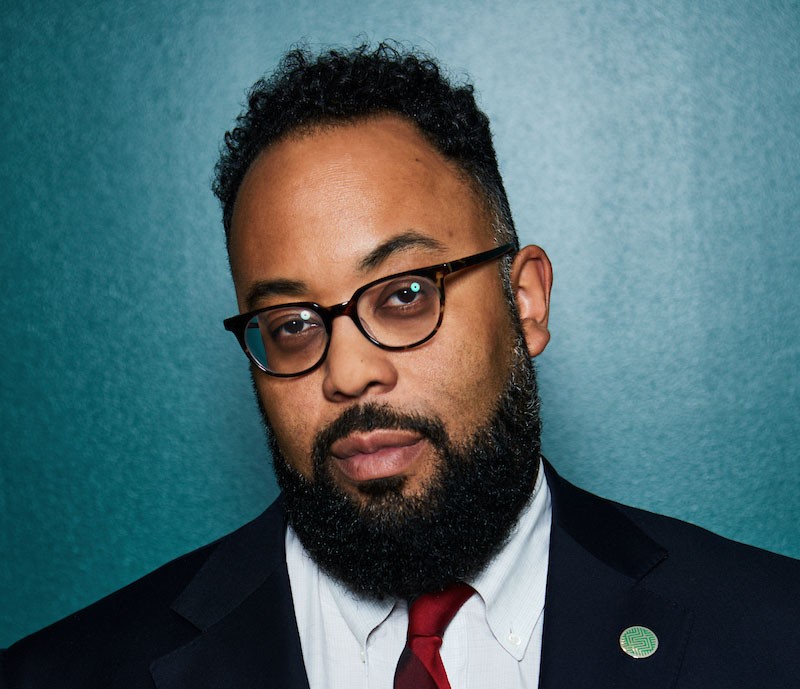
This past Sunday, The Washington Post published an opinion piece in its Outlook section on the D.C. mayoral race by Kojo Nnamdi under the headline, "For D.C., Vince Gray's Election is a Bold Step Backward." Kojo personally felt that the Washington Post headline for this piece did not accurately represent the piece's content. He does not think the mayoral election represents a step backwards for D.C., and felt a headline along the lines of "D.C.

This past Sunday, The Washington Post published an opinion piece in its Outlook section on the D.C. mayoral race by Kojo Nnamdi under the headline, "For D.C., Vince Gray's Election is a Bold Step Backward." Kojo personally felt that the Washington Post headline for this piece did not accurately represent the piece's content. He does not think the mayoral election represents a step backwards for D.C., and felt a headline along the lines of "D.C. Mayoral primary: Back to the Future, Or Not" would have been more appropriate. The ideas expressed in the piece are Kojo's alone. For those of you interested in the editorial process, we've published the full text of Kojo's original piece below:

Eleanor Holmes Norton once said to me casually “I grew up in a city that was predominantly white.”

That got me to thinking. The District of Columbia has been predominantly black since my arrival here in 1969. It is, frankly, one of the reasons I came here, since I was a Black Power advocate at the time, and felt the District was a place where Black Power could become reality.

It has. We've experienced the growth of black political power in Washington, and at one level it’s resulted in what my friend Frank Smith (former Ward One DC Council member) once called “The Barry Revolution,” meaning that important leadership positions, jobs and contracts that were once reserved for whites in the city were essentially transferred to blacks.

Back then, we Black Power advocates were primarily concerned (at least if we believed our own rhetoric), with what black political power would mean for the least among us, the poor. Our admittedly naïve notion was that we would see a rapid transformation in the conditions of life i.e., education, employment, housing and social services for those living on the margins of society.

It didn’t happen. The transformative promise of post-civil rights black political power in Washington was limited to those of us who were educationally prepared to benefit from the transformation.

Many of us changed, but the rhetoric didn’t. For instance, I went from Black Nationalist to Panafricanist to Marxist to whatever I am today. A career in journalism and talk show hosting have caused me to exercise caution in characterizing myself ideologically. While ideology is fine for abstract arguments, suffice it to say that my world view today is driven by the professional imperative to publicly discuss and therefore acknowledge reality on a daily basis.

And the emerging reality is that the District is changing. It’s becoming more racially, ethnically and culturally diverse . The tax base is expanding, which every Mayor in every city I know finds desirable. But it also means increasing gentrification, which throughout history has been controversial, since it invariably means more affluent residents displacing poorer residents.

With our country’s troubled racial history, gentrification in a city like the District can be socially and politically volatile.

That political volatility is what has resulted in Adrian Fenty’s ouster. Vincent Gray, a decent and thoughtful man, benefited in large measure from black voters’ anger at Adrian Fenty. That anger, the result of four years of real and perceived slights by Fenty towards his black constituents, has been analyzed in dozens of newspaper and magazine articles, broadcast commentaries, blogs and tweets.

Of particular note should be Colbert King’s column of September 4th 2010 “Where DC Mayor Fenty Went Wrong,” in which he essentially pointed out that in a city that’s still majority black, for Fenty to begin by appointing non-blacks to most cabinet positions was, at the very least, thoughtless, and at worst grossly insensitive.

When I mentioned this to a white friend, she remarked “But I thought we’d gotten beyond that,” to which I responded “What do you think the response of white Americans would have been if Barack Obama had put together a majority black cabinet immediately after taking office? Probably not “Oh, he’s just finding the best people to do the job.”

In spite of that, I am nevertheless disturbed over the level of hostility directed at Adrian Fenty, the outright hatred which seemed to come so easily to many African Americans with whom I associate, a hatred that was often expressed in even more extreme terms about Schools chancellor Michelle Rhee.

So when Eleanor Holmes Norton reminded me that she grew up in a predominantly white city, I got to thinking that cities change all the time, and that the city that elected Adrian Fenty in 2006, was not the same city that elected Marion Barry in 1978, or for that matter in 1994. That said, our increasing diversity does not mean we’re in a post-racial environment. A politician in this city ignores race at his or her peril.

On the other hand, I see troubling tensions Vincent Gray must reconcile. Former Mayor Marion Barry assigned himself a central role in the Vincent Gray campaign, and a recent article on The Root.com by Washington Post writer Nikita Stewart compares the declining popularity of Newark Mayor’s Corey Booker’s “hero’s welcome” given to former Newark Mayor Sharpe James on his return home from jail.

If the template, in 2010, for black Mayors who connect favorably with black voters is Sharpe James and Marion Barry, even after their jail terms, then maybe Vince Gray needs to hurry up and get himself locked up so he too can “keep it real.”

An important aside. I do have, as the saying goes, some “history” with Mr. Barry.
When the Washington City paper published a tongue-in-cheek cover story saying “Run Kojo Run” (for mayor of DC), one of the reasons then Loose Lips columnist Mike De Bonis gave was “He knows everyone in the city.”

I’ve been living in the city for 41 years, interviewing local newsmakers on television and radio for 37 of those years. So I do know a lot of people. Among them is Marion Barry, who was associated in the Student Non violent Co-ordinating Committee with some of my earliest mentors at a now forgotten institution called The Center For Black Education.

In 1990, Mr. Barry chose to announce his much anticipated decision not to run for a fourth consecutive mayoral term on the television show I host at Howard University Television, Evening Exchange. The announcement was in part a political calculation aimed at shoring up support in the black community following his arrest for smoking cocaine in a sting at the Vista hotel. Nevertheless, that broadcast attracted the largest audience the show and the station had ever garnered, and frankly provided a career boost for me.

But if two disgraced former black Mayors, (and I’m personally fond of Marion Barry even though he’ll probably stop speaking to me, again, after this) are somehow still more appealing to a majority African American voters than any alternative, because they “talk the talk” of race, then Vincent Gray’s diplomatic skills will be put to a severe test as he undertakes the task of continuing the city’s diverse growth without disturbing its racial sensitivity.

It’s a daunting task. I admire anyone who undertakes it, and it’s crucial that white residents of the city understand that assertions of a post-racial District, where a mayor should not be expected to take race into account when crafting policies or making appointments, ignore the sensitivities of their black neighbors who have seen generations of dreams crushed by discrimination and racism, and don’t appreciate being advised to “get over” their lingering pain.

It is, however, time for us all to get over the political obsession that the wards of this city are in constant competition with one another for Mayoral largesse, the black wards versus the white wards, the poor wards versus the rich wards. If there's one thing I’ve learned from WAMU 88.5's “Kojo In Your Community” visiting all wards, it's that the residents of this city, black and white, rich and poor, all seem to think that people in some other ward have it better.

If our priorities are truly the children, the under-educated, the unemployed, the poorly housed, and the homeless, then those of us who in fact have it better can get past this recent anger, and figure out how to permanently change the conditions of the least among us.

Good Luck Vince, you’ll need it.

The Kojo Nnamdi Show is produced by member-supported WAMU 88.5 in Washington DC.